Why Bluffdale Homes Are Prone to Spring Basement Flooding
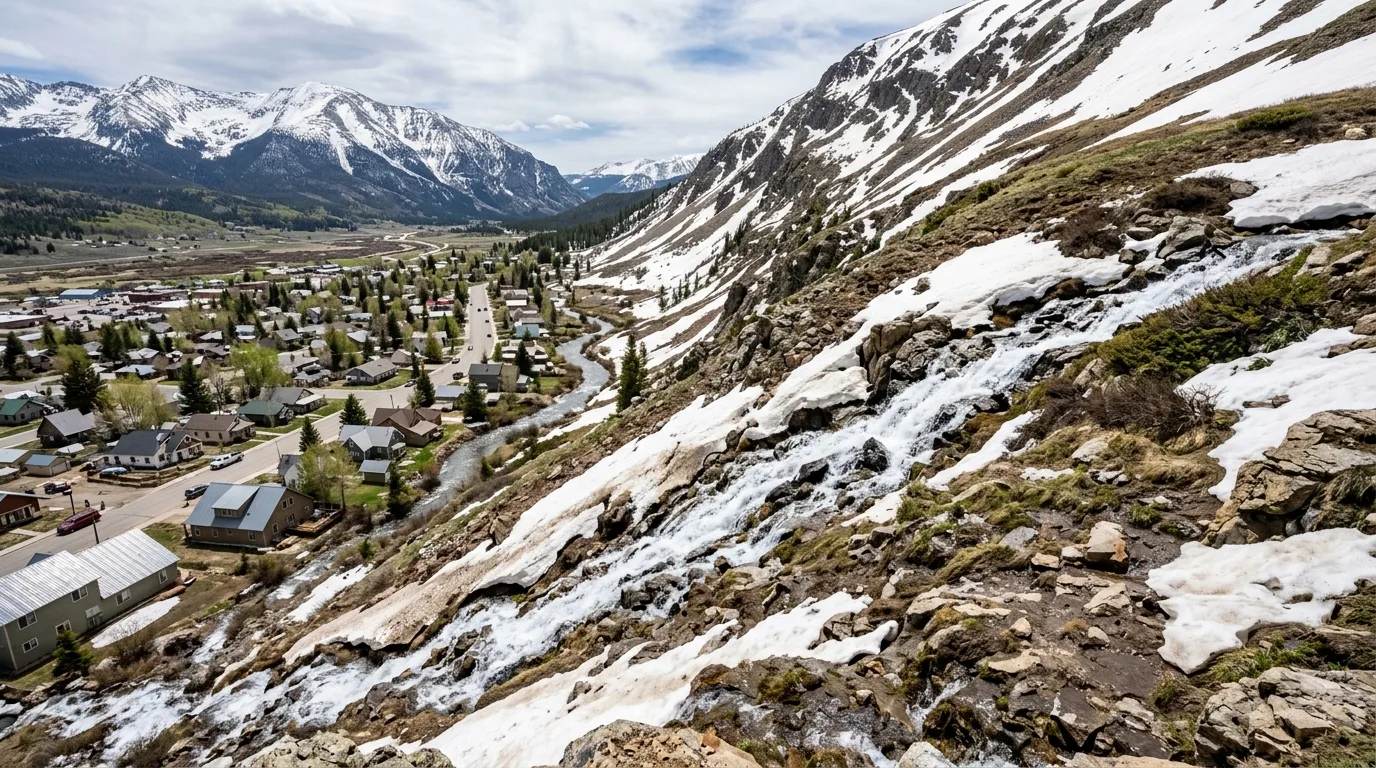
Every March, homeowners throughout Bluffdale discover the same problem: water in the basement. In this post, we cover why Bluffdale’s specific soil type creates spring flooding risk, how the Jordan River corridor elevates groundwater, and what steps homeowners can take before the next melt season to reduce their exposure.
Basement Flooding in Bluffdale? We Respond 24/7
Call (877) 698-1311 for emergency water removal and flood cleanup throughout Salt Lake County.
Why Spring Basement Flooding Matters for Bluffdale Homeowners
Spring basement flooding in Bluffdale is not random — it follows a predictable annual cycle tied directly to how the local soil behaves after a dry winter. Bluffdale sits on the official Bluffdale soil series: a very deep, fine silty clay loam with clay content exceeding 35% and characteristically slow permeability. When Bluffdale’s 43 inches of annual snowfall begins melting in March and April, the clay-rich soil can absorb only a fraction of that water before reaching saturation. The remaining melt runs as surface water or builds up against basement walls as hydrostatic pressure.
Once the clay saturates, it stays saturated for days — not hours. Sandy soils in other Utah communities allow melt water to drain quickly, but in Bluffdale’s established neighborhoods near Wardle Fields Regional Park and along the Jordan River Parkway Trail, water lingers against foundation walls long after visible surface flooding has resolved. That sustained pressure is what forces moisture through foundation cracks, window well drains, and floor drain seals into finished basements.
The consequences for homeowners are significant: median home values in Bluffdale exceed $717,000, and finished basements represent a substantial portion of livable square footage. A single spring flooding event can cause $5,000–$20,000 in damage to flooring, drywall, and personal property if not addressed immediately.
Types of Spring Flooding Bluffdale Homeowners Experience
Hydrostatic pressure seepage: The most common form. Groundwater builds up against the exterior foundation wall and seeps through cracks, cold joints, or porous concrete block. This typically appears as moisture streaks on basement walls or standing water appearing near the base of foundation walls.
Window well flooding: Window wells that lack functional drains or have drains blocked by soil and debris collect snowmelt and funnel water directly into basement windows. Homes in Sage Estates and similar subdivisions with below-grade window wells are particularly vulnerable.
Floor drain backup: When the municipal sewer or private drainage system becomes overwhelmed by spring flow, floor drains can back up rather than drain — pushing water into the basement rather than removing it. This is especially relevant near the Jordan River corridor, where the city has specifically identified elevated groundwater risk.
Overland flooding: In lower-elevation areas or properties with negative grading (land sloping toward the house), snowmelt pools against the foundation before it can drain away.
Practical Uses for Pre-Season Flooding Prevention
Inspect and clean window well drains: Window well drains that are clogged with soil, leaves, or gravel become ineffective within a single season. Clear them each February before melt season begins, and consider adding gravel backfill to improve drainage capacity.
Check downspout extensions: Downspouts that terminate within 3 feet of the foundation are one of the most common causes of avoidable basement flooding. Extend all downspouts at least 6 feet from the foundation, directed away from the house. This single change has a significant impact on spring water volume reaching the foundation.
Evaluate basement window seals: Aging window seals in basement windows allow direct water infiltration during window well flooding events. Inspect sealant and replace any material that shows cracking or separation before March.
Grade away from the foundation: Over time, soil settles and the grade adjacent to foundations can reverse, directing surface water toward the house. Adding soil to restore positive grade (sloping away from the foundation) is a low-cost, high-impact preventive measure.
Test your sump pump in January: The worst time to discover your sump pump doesn’t work is during peak spring melt. Test the pump every January by pouring water into the pit — confirm it activates and discharges correctly. Replace float switches or the pump itself if the unit is more than 7–10 years old.
How Spring Flooding Progresses in a Bluffdale Basement
Understanding the sequence helps homeowners intervene at the right point. Spring flooding in Bluffdale typically begins with sustained moisture on exterior wall faces — visible efflorescence (white mineral deposits) or damp spots that predate actual water entry. As saturation increases over the first week of a melt event, moisture penetrates more deeply into porous block or concrete, appearing as dark wet patches on interior surfaces before standing water develops.
By the time standing water appears, the foundation wall has already absorbed significant moisture — meaning drying after visible water is removed takes days, not hours. Bluffdale’s clay-soil environment extends this further because the soil continues holding moisture against the foundation throughout the drying period, maintaining the pressure gradient that drives seepage. This is why professional flood cleanup and structural drying are necessary after spring basement flooding: the visible water is only part of the moisture that needs to be addressed.
Emergency Flood Cleanup in Bluffdale
Don't let spring flooding sit — call for professional extraction and structural drying before mold develops. (877) 698-1311.
Cost Factors for Spring Flood Cleanup in Bluffdale
Spring basement flooding cleanup in Bluffdale typically runs $1,361–$6,270 for room-scale events and $7,000–$16,000+ for severe flooding affecting large finished areas. The adjacent Draper market averages $2,298–$2,361 for standard flood cleanup, which benchmarks the cost in this region of Salt Lake County. Clean water from snowmelt runs $3–$4 per square foot to clean up; if the flooding involves any sewer backup component, costs climb to $7–$7.50 per square foot due to Category 3 contamination protocols.
The biggest cost variable is response time. Homeowners who call immediately upon discovering flooding — before carpet and pad are fully saturated, before wall cavities take on significant moisture — often save thousands in material replacement costs compared to those who wait 24–48 hours. Carpet that is extracted within the first few hours can often be salvaged; carpet that has been wet for 24+ hours typically requires replacement along with the pad.
Frequently Asked Questions
Why does my Bluffdale basement flood every spring even though nothing has changed?
The recurrence reflects the annual cycle of Bluffdale’s clay soil: it dries out over summer and fall, then re-saturates each spring as snowmelt exceeds drainage capacity. Each year, the same entry points — foundation cracks, window well drains, floor drain seals — are re-pressurized by the same groundwater buildup. Without addressing those entry points directly, the pattern repeats indefinitely. A professional water damage assessment can identify the specific entry points and recommend targeted repairs such as interior drain tile, window well covers, or exterior waterproofing.
Does homeowners insurance cover spring basement flooding in Bluffdale?
Standard homeowners insurance typically covers sudden and accidental water damage — for example, a burst pipe or a washing machine overflow. Gradual seepage through foundation walls is often excluded as a “repeated seepage” or “flooding” exclusion. Surface flooding from outside the home generally requires separate flood insurance through the National Flood Insurance Program (NFIP). If you experienced a specific sudden event — a window well drain failed during a storm — that may qualify under your standard policy. Review your policy specifics and call us; we document the event in detail for insurance purposes regardless of the cause.
How quickly can mold develop after spring flooding in Bluffdale?
Mold can begin growing within 24–48 hours in wet conditions. Bluffdale’s spring flooding typically involves cool temperatures that slow mold growth somewhat compared to summer events, but once moisture is trapped in wall cavities, insulation, or under flooring, the conditions for mold establishment are present regardless of temperature. Professional extraction and drying within the first 24 hours is the most effective way to prevent mold development after a flooding event.
Protect Your Bluffdale Basement This Spring
Schedule a pre-season moisture assessment or call for emergency flood cleanup. Bluffdale Water Damage Restoration — (877) 698-1311.
Related: