Mold After Water Damage: Why Bluffdale Basements Are at Risk
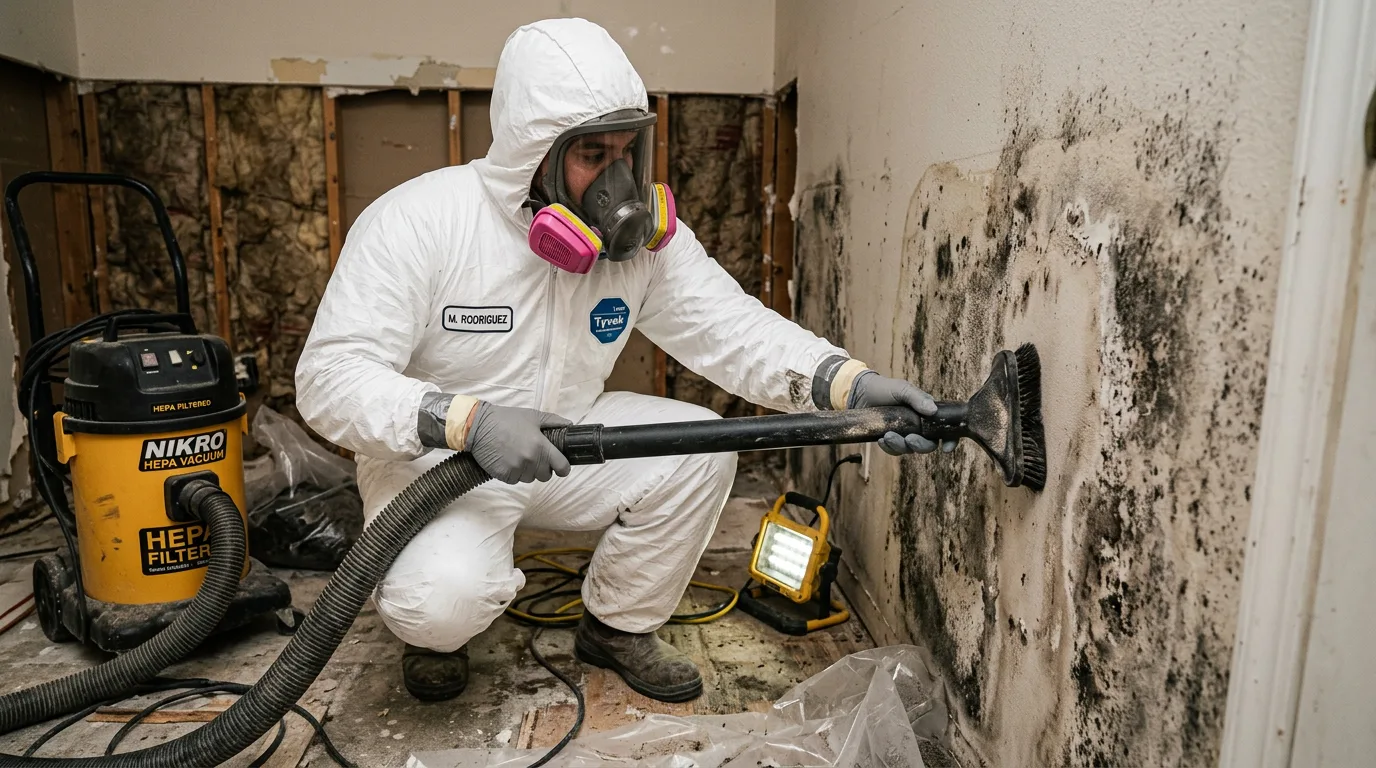
Mold after water damage doesn’t announce itself. It develops quietly in wall cavities, under flooring, and in crawl spaces — often discovered weeks after a flood event. In this post, we cover when mold develops after water damage in Bluffdale homes, why basements in this climate are at elevated risk, and what the correct response looks like.
Mold in Your Bluffdale Basement? Professional Remediation Available.
Safe removal, HEPA containment, and prevention treatment. Call (877) 698-1311.
Why Mold After Water Damage Matters in Bluffdale
Mold growth following water damage is one of the most common and costly secondary damage problems Bluffdale homeowners face. The Bluffdale soil series — a clay-rich, slow-draining soil that holds moisture against foundations — creates a sustained moisture environment at the basement level that persists well beyond the visible flooding period. When spring snowmelt pushes water into basements throughout Bluffdale Heights, Day Ranch, and the Falls at Boulden Ridge areas, the moisture that enters often remains at elevated levels in wall cavities and under flooring long after visible water is gone.
In Bluffdale’s climate, this moisture persistence occurs during the time of year — late March through May — when warming temperatures create the temperature gradient ideal for mold growth. The combination of sustained moisture, organic materials (drywall paper, wood framing), and warmth creates conditions where mold can establish colonies in as little as 24–48 hours in vulnerable areas. By the time visible mold appears on surfaces, the colony is typically 2–4 weeks old and well-established.
The health implications matter as well. Mold exposure can cause respiratory symptoms, allergic reactions, and in sensitive individuals, more serious effects. For Bluffdale homeowners whose basements serve as living space — finished media rooms, home offices, and bedrooms are common in this market — the impact of unaddressed mold goes beyond property value to occupant health.
Types of Mold Common After Water Damage in Bluffdale Homes
Cladosporium: The most common post-water-damage mold in Utah basements. Appears olive-green to black on wall surfaces. Produces allergens that can trigger respiratory symptoms. Common in areas of sustained elevated humidity rather than acute flooding.
Stachybotrys chartarum (black mold): Develops in areas of prolonged, high moisture — sustained flooding or extended elevated humidity. Produces mycotoxins. Requires sustained moisture for 8–12 days to establish, making it more common after flooding events that were not professionally dried.
Aspergillus: Develops on a wide range of organic materials including drywall, insulation, and wood. Common in crawl spaces where vapor barriers are inadequate or damaged. Bluffdale crawl spaces with clay-soil contact and inadequate vapor barriers are common hosts.
Penicillium: Appears blue-green and spreads rapidly on water-damaged soft furnishings and drywall. Common in finished basements after flooding events where materials were not removed promptly.
Practical Uses — Mold Prevention After a Water Event
Professional drying within 24–48 hours: The single most effective mold prevention measure is completing professional water extraction and beginning structural drying within 24 hours of a water event. Industrial air movers and dehumidifiers create the conditions needed to dry wall cavities and subfloor assemblies before mold can establish — consumer equipment lacks this capacity.
Remove saturated porous materials immediately: Carpet, carpet padding, and drywall that has been saturated to more than a few inches above the flood line harbor mold even after the outer surface appears dry. Removing these materials before they are “dry” — and replacing them with new materials after the structure is verified dry — eliminates the most common mold substrate.
Apply antimicrobial treatment to structural surfaces: After extraction and material removal, EPA-registered antimicrobial spray applied to concrete, framing, and subfloor surfaces prevents mold establishment during the drying period. This step is often skipped in rushed or DIY responses and is a primary cause of mold development even after apparent cleanup.
Verify drying with calibrated moisture meters: Visual inspection is insufficient to confirm structural drying. Moisture meter readings at multiple points in walls, subfloors, and framing verify that materials have returned to baseline levels. This verification step is what distinguishes professional restoration from amateur cleanup.
Address the moisture source before sealing walls: Applying new drywall before the underlying moisture source is identified and addressed traps moisture in the wall cavity — creating ideal mold conditions that may not become apparent for weeks or months.
Water Damage and Mold in Bluffdale — Call for Professional Assessment
Same-day response available throughout Salt Lake County. (877) 698-1311.
How Mold Progresses After Flooding in Bluffdale Basements
The timeline of mold development after a basement flooding event in Bluffdale follows a predictable sequence. In the first 24 hours, mold spores (always present in the environment) begin germinating on wet organic surfaces. Between 24 and 48 hours, active mold growth begins — still invisible to the naked eye, but detectable through air sampling. Between 2 and 7 days, visible mold colonies appear on the most moisture-saturated surfaces — typically drywall paper, wood, and fabric materials.
In a Bluffdale basement, this progression is accelerated by the clay-soil moisture that maintains elevated basement humidity even after active flooding has resolved. The sustained moisture contact from the surrounding soil keeps wall bases and foundation-adjacent materials at elevated moisture levels — creating conditions that support mold growth longer than in more permeable soil environments.
Bluffdale’s spring temperatures in the 50–65°F range during the peak flooding season are cooler than optimal for the fastest mold growth, which typically occurs at 70–90°F. However, mold growth at these temperatures is still possible — it simply takes slightly longer. Professional drying started within 48 hours of a spring flood event is typically sufficient to prevent mold, but delays beyond 48 hours significantly increase risk.
Cost Factors for Mold Remediation in Bluffdale After Water Damage
Mold remediation in Bluffdale following water damage ranges from $500–$1,500 for small, localized issues to $3,000–$6,000 for moderate infestations and $10,000+ for severe cases involving structural materials. Across Salt Lake County, mold remediation costs track closely with Utah statewide pricing. Some mold remediation is covered by homeowners insurance when it results directly from a covered water damage event — we document the cause-and-effect relationship for every project to support your claim.
The financial argument for preventing mold through prompt professional drying is compelling: the cost of proper extraction and drying ($1,000–$3,000 for most basement events) is typically less than the cost of mold remediation after the fact ($3,000–$10,000+), and far less than the combined cost of remediation plus reconstruction of materials that were not removed promptly.
Frequently Asked Questions
How do I know if mold has developed in my Bluffdale basement after flooding?
The most reliable early indicator is musty odor — present before visible mold in most cases. Visual mold appears on drywall paper, wood surfaces, and insulation facing as black, green, gray, or white discoloration. Air sampling (conducted by a professional industrial hygienist or restoration company) can detect mold at levels below visual threshold. In Bluffdale basements, professional post-flood assessment with moisture meters is the most reliable way to determine whether conditions have been controlled sufficiently to prevent mold development.
Can I remediate minor mold in my basement myself?
The EPA guideline for homeowner-managed remediation is affected areas under 10 square feet. For surface mold on non-porous materials (painted concrete, glass, tile) in this size range, appropriate PPE and commercial antifungal products can be effective. However, any mold in wall cavities, under flooring, or on porous materials like drywall or insulation requires professional remediation regardless of visible area — the hidden growth behind the surface is typically more extensive than what is visible. In Bluffdale’s moisture-prone environment, attempting DIY remediation of post-flood mold frequently results in incomplete removal and recurrence.
How long does mold remediation take in Bluffdale?
Mold remediation in Bluffdale takes 1–5 days depending on extent. A single affected wall or room is typically remediated in 1–2 days. Larger infestations affecting multiple spaces, crawl areas, or HVAC systems take longer. Post-clearance inspection follows remediation to verify that mold levels have returned to normal background concentrations before reconstruction begins. We document all phases of remediation for insurance purposes.
Mold Remediation in Bluffdale — Safe, Certified, Documented
HEPA containment, EPA-registered treatment, and post-clearance verification. Call (877) 698-1311.
Related: