How Bluffdale's Clay Soil Affects Your Foundation After a Dry Winter
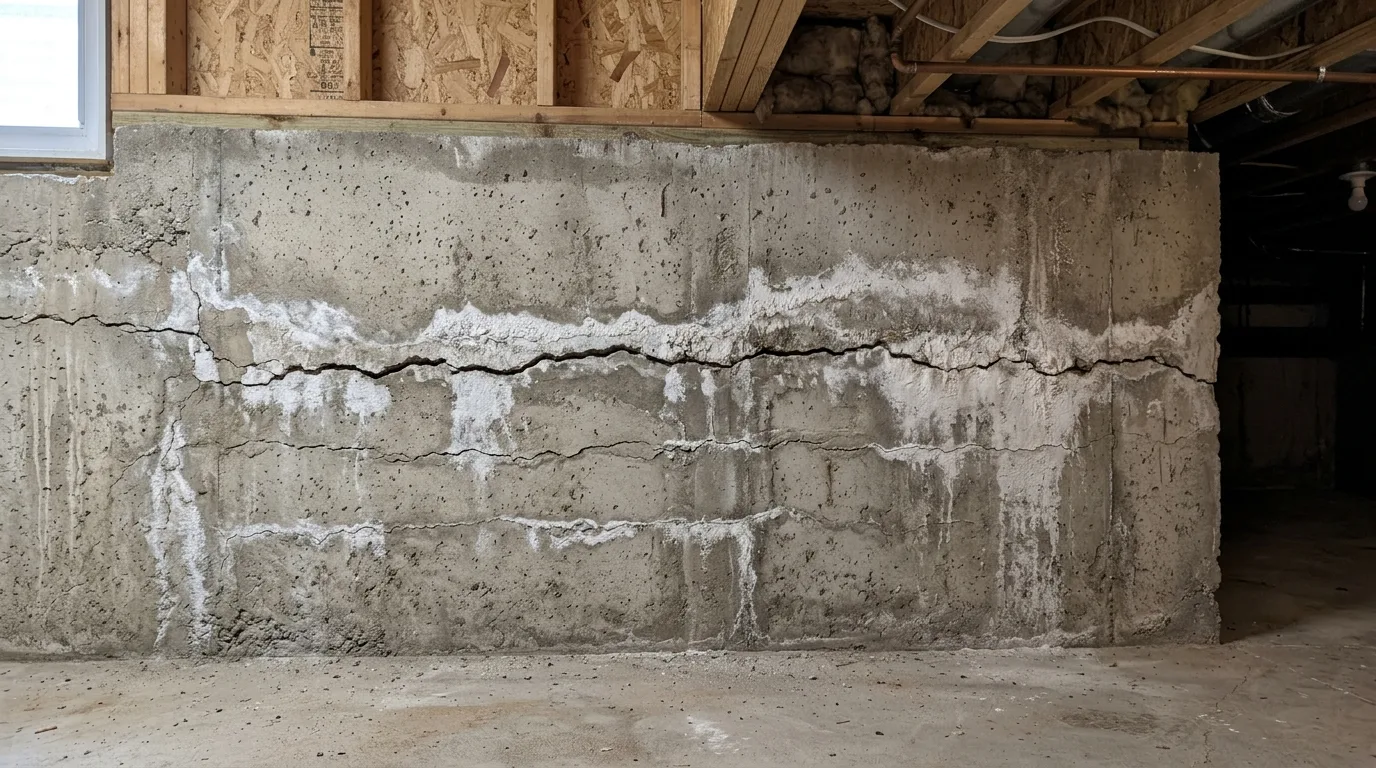
What do Bluffdale’s dry winters and wet springs have in common? Both are hard on your foundation. In this post, we cover how the city’s clay-rich soil expands and contracts with seasonal moisture changes, what that movement does to foundations over time, and why Bluffdale homeowners see a surge of water intrusion issues each spring that is directly tied to winter soil conditions.
Water Intrusion After a Dry Winter? We Can Help.
Foundation water damage assessment and restoration throughout Bluffdale and Salt Lake County. Call (877) 698-1311.
Why Bluffdale’s Soil Creates a Seasonal Foundation Problem
Bluffdale’s soil is classified as the official Bluffdale series — a fine silty clay loam formed from ancient lake sediments that once covered this part of the Salt Lake Valley. What makes this soil unusual from a foundation perspective is its clay content: exceeding 35% of the soil profile, this clay behaves very differently from the sandy or loamy soils common in other parts of Utah. The clay expands when wet and contracts when dry, meaning it physically moves against your foundation walls in response to seasonal moisture changes.
During Bluffdale’s dry winters — annual precipitation averages only 16 inches, with the driest months being October through February — the clay soil loses moisture and contracts. That contraction pulls the soil slightly away from foundation walls, creating micro-gaps. When spring arrives and snowmelt rapidly rehydrates the soil, it expands back — but not necessarily to the exact position it occupied before. Over years and decades, this repeated expansion-contraction cycle causes cumulative micro-fracturing of foundation concrete and masonry. Each small crack from one winter becomes a slightly larger crack after the next, and these are precisely the gaps that allow water entry during spring melt events.
This pattern is documented in foundation damage research specific to the Bluffdale area: dry winters cause soil contraction and foundation stress, followed by spring rehydration that amplifies water intrusion through the cracks created during the dry period. Homeowners in established neighborhoods like Bluffdale Heights and Palisade Acres are observing the cumulative effects of multiple seasons of this cycle in their aging foundations.
Types of Foundation Damage from Clay Soil Movement
Horizontal cracking in poured concrete walls: Horizontal cracks develop when the outward pressure from saturated, expanding soil exceeds the lateral strength of the foundation wall. These cracks are more serious than vertical ones because they indicate bowing or movement of the wall itself, not just surface-level cracking.
Stair-step cracking in block foundations: Concrete masonry unit (CMU) foundations crack at the mortar joints in a stair-step pattern when soil pressure is uneven. This is common in Bluffdale properties built in the 1980s and 1990s when CMU construction was prevalent.
Vertical cracks at corners: Corner cracks develop when different soil conditions on two sides of the foundation exert unequal pressure. These allow direct water infiltration at the most vulnerable structural point.
Floor heaving: In severe cases of clay soil expansion beneath a slab, the slab itself can heave upward. This is more common in crawl spaces and unfinished basements where vapor barriers are inadequate and the soil beneath maintains high moisture content year-round.
How the Dry-Wet Cycle Accelerates Water Damage in Bluffdale
The homeowner impact of this seasonal pattern typically emerges as discovered water damage after the first major melt event of the season. By the time a Bluffdale homeowner notices moisture on basement walls or standing water on the basement floor, the cycle of foundation stress from the preceding dry winter has already created the entry points. The spring melt simply provides the water to enter through cracks that were created or widened during the dry period.
This is why foundation water damage in Bluffdale is often more severe than in regions with more uniform year-round moisture. The dry-wet contrast is dramatic: average winter low temperatures of 21°F combine with low precipitation to create very dry soil conditions, then spring brings 43 inches of snow worth of melt water in compressed timeframe. The foundation transitions from dried-out to saturated in a matter of weeks — stress that compounds each passing season.
Understanding this mechanism helps homeowners interpret what they see: water damage that appears to come through the middle of a solid wall (rather than through obvious cracks) often reflects this slow, cumulative cracking process. Professional moisture detection tools — including infrared cameras and pin-type moisture meters — can locate moisture moving through micro-cracks that are not visible to the naked eye.
Practical Uses for Protecting Bluffdale Foundations
Apply interior waterproof coating before spring: Interior waterproofing products applied to basement walls can temporarily reduce seepage through porous concrete block, but they address symptoms rather than causes. They are most useful as a short-term measure while more comprehensive drainage solutions are planned.
Install or maintain interior drain tile: Interior drain tile (a perimeter French drain beneath the basement floor) intercepts groundwater before it can build up against the wall and directs it to a sump pit. This is the most effective long-term solution for Bluffdale homes with chronic hydrostatic seepage.
Address exterior grading: Grading that has settled to slope toward the foundation channels surface runoff directly at the problem area. Restoring positive grade (sloping away from the house) significantly reduces spring water volume reaching the foundation.
Monitor and document cracks annually: Photograph all foundation cracks each fall and compare to prior years. Cracks that are growing — wider, longer, or multiplying — indicate active foundation movement that warrants professional structural assessment before the next spring season.
Ensure crawl space vapor barriers are intact: Homes with crawl spaces in areas like Day Ranch are vulnerable to moisture accumulation under the floor when vapor barriers are damaged or absent. Intact vapor barriers reduce the moisture that clay soil can wick upward into the structure.
Water Damage from Foundation Issues in Bluffdale?
Our team assesses and restores water damage caused by clay soil foundation movement throughout Salt Lake County. Call (877) 698-1311.
Cost Factors for Foundation Water Damage Restoration in Bluffdale
Foundation water damage restoration in Bluffdale depends on the entry mechanism and extent of infiltration. Standard water damage cleanup ranges from $450–$1,000 for minor incidents to $1,361–$6,270 for room-scale events. The Draper area adjacent to Bluffdale benchmarks at $2,298–$2,361 for typical restoration jobs in this part of Salt Lake County. Clean water seepage through foundation cracks is Category 1 (clean water) at $3–$4 per square foot; if the water source contains sediment or bacterial growth from soil contact, classification may escalate.
Beyond cleanup costs, homeowners should factor the cost of addressing the underlying foundation issue — because water damage restoration without addressing the entry point results in the same damage the following spring. Foundation crack injection, interior drain tile installation, or exterior waterproofing are separate costs that prevent recurrence. We focus on the water damage restoration scope and can refer you to structural and waterproofing contractors for the foundation repair component.
Frequently Asked Questions
How do I know if my Bluffdale foundation has been damaged by clay soil movement?
Look for new or growing cracks in foundation walls — particularly horizontal cracks (which indicate bowing) or stair-step cracks in block foundations. Other signs include doors and windows that stick or don’t close correctly (indicating the structure has shifted), visible efflorescence (white mineral deposits on concrete surfaces left by evaporating seepage water), and any moisture on basement walls after rain or snowmelt. A professional assessment with moisture detection equipment can identify active water movement through cracks that are not yet visible.
Does Bluffdale’s new construction have the same clay soil risk as older homes?
New construction uses more modern foundation techniques — higher-quality waterproofing membranes, better drainage systems, and improved understanding of local soil behavior. However, newer homes are not immune to clay soil movement. Homes in Sage Estates and other recent Bluffdale developments are still built on the same Bluffdale series soil and will experience the same expansion-contraction cycle. The difference is that modern construction may manage the risk more effectively if properly installed — but that requires correct installation, which varies by builder.
Is spring foundation water damage covered by homeowners insurance in Utah?
Coverage depends on the cause. Sudden and accidental water damage — a sump pump fails during a storm, a foundation crack that didn’t previously exist suddenly develops and allows flooding — may be covered. Gradual seepage that develops over multiple seasons is typically excluded as a maintenance issue or pre-existing condition. Flood damage from external surface water usually requires separate flood insurance. Document all damage with photos and contact your insurer; we provide detailed documentation for every project that supports your claim process.
Protect Your Bluffdale Foundation from Water Damage
Call Bluffdale Water Damage Restoration for a professional assessment — (877) 698-1311. Serving all of Salt Lake County.
Related: