5 Signs of Water Damage Bluffdale Homeowners Shouldn't Ignore
Most water damage in Bluffdale doesn’t start with a flood — it starts with a subtle warning sign that gets dismissed as a minor issue. In this post, we cover the five warning signals that Bluffdale homeowners most commonly overlook, why each one is more serious than it appears, and when to call a professional before a manageable problem becomes a costly one.
Spotted Water Damage Signs in Bluffdale?
Early detection saves thousands. Call (877) 698-1311 for a professional water damage assessment throughout Salt Lake County.
Why Recognizing Water Damage Early Matters in Bluffdale
Ignoring early water damage signs is the most expensive mistake Bluffdale homeowners make. Every day that water damage goes unaddressed in this climate, moisture penetrates further into structural materials — drywall, insulation, framing — escalating cleanup and repair costs. Bluffdale’s clay-rich soil holds moisture against foundations longer than in regions with better-draining soil, which means the “moisture source” driving a problem indoors may persist for days or weeks after visible surface conditions change.
The economic stakes are real: a minor moisture intrusion caught within 48 hours might cost $450–$1,000 to address. The same problem discovered two weeks later — after mold has established, flooring has buckled, and drywall has wicked moisture above the flood line — can cost $5,000–$15,000 or more. Recognizing the early signals is the highest-return action a Bluffdale homeowner can take.
Sign 1: Musty Smell in the Basement or Crawl Space
A persistent musty odor in the basement is the earliest and most reliable indicator of active mold growth or sustained moisture in hidden areas. The smell is produced by microbial volatile organic compounds (mVOCs) — metabolic byproducts of mold and bacteria — and is detectable before any visible mold appears on surfaces.
In Bluffdale homes, basement musty odors often originate from wall cavities, under flooring, or in crawl spaces where moisture has penetrated but where visual inspection is difficult or impossible. The clay-soil moisture environment in the Palisade Acres and Sage Estates neighborhoods means that basements with incomplete waterproofing have ongoing moisture contact at the foundation level, creating chronic low-level conditions conducive to mold and odor.
Do not assume the odor will resolve on its own. It indicates an active moisture source. Call for an assessment with moisture detection equipment to locate the source before mold growth becomes extensive.
Sign 2: Water Stains on Ceilings, Walls, or Floors
Yellow or brown water stains on drywall, ceiling tiles, or concrete floors indicate a past or ongoing water intrusion event. The stain itself is the dried mineral deposit left behind as moisture evaporates — meaning the water has already been present and cycled through the material multiple times.
A single stain with no active moisture and no odor may represent an old, resolved event. But most stains in Bluffdale homes represent ongoing seasonal seepage that re-activates each spring during snowmelt or reactivates during summer monsoon storms. The stain is visible evidence of repeated moisture cycles, and the wall cavity or ceiling assembly behind the stain has very likely absorbed more moisture than the visible stain suggests.
Before treating or repainting a stain, have a professional assess whether active moisture is present. Repainting over an active moisture problem conceals the warning signal without addressing the cause.
Sign 3: Buckling, Warping, or Soft Flooring
Hardwood floors that have developed gaps between boards, laminate that is bubbling or lifting at seams, or subfloor sections that feel soft or springy underfoot all indicate moisture infiltration into the flooring assembly. These changes are structural — they mean moisture has penetrated the flooring material and the substrate beneath it.
In Bluffdale, floor-level moisture most commonly originates from two sources: basement seepage wicking upward through slabs, and water intrusion from leaks in supply plumbing or appliances above the floor. Homes throughout Independence at the Point and newer developments often have slab foundations where a plumbing slab leak can be in contact with flooring for days before becoming apparent through flooring deformation.
Soft or buckling flooring requires immediate investigation. The subfloor and framing beneath may already be saturated, and mold can develop within the flooring assembly faster than in open basement areas because of the enclosed environment.
Sign 4: Frost or Condensation on Windows and Walls
Frost on interior window surfaces or condensation forming on basement walls in winter is a moisture signal specific to Utah’s climate. Excessive interior humidity — generated by moisture evaporating from wet materials, a wet crawl space, or inadequate vapor barriers — creates condensation when warm interior air contacts cold surfaces.
This is particularly relevant in Bluffdale where freeze-thaw cycles produce conditions where one morning can bring frost on basement windows that weren’t frosted the day before. When this occurs, the interior humidity is high enough that there is a sustained moisture source somewhere in the structure. This can be as straightforward as a wet crawl space beneath the floor or as significant as slow seepage through foundation walls.
Consistent condensation or frost on interior surfaces should prompt a humidity assessment using a calibrated hygrometer and a professional moisture scan of accessible structural areas.
Sign 5: Higher-Than-Normal Water or Utility Bills
An unexplained increase in water consumption tracked on your utility bill — without a corresponding change in usage habits — often indicates a slow plumbing leak. Supply line leaks inside walls, under slabs, or in crawl spaces can release significant water volumes before any visible sign appears at the surface.
Bluffdale’s newer homes, particularly in Bluffdale Heights, have copper and PEX supply lines that can develop pinhole leaks or fittings failures that go undetected for weeks. These slow leaks continuously wet the surrounding framing, insulation, and drywall — creating ideal mold conditions long before the visual or odor signs described above become apparent.
If your water bill has increased unexpectedly, turn off all water-using appliances and check your meter. If the meter continues to advance, you have an active leak. Call a plumber first to locate and repair the leak, then call us to assess and address any water damage that occurred in the surrounding structure.
Don't Wait on Water Damage Signs in Bluffdale
Professional water damage assessment throughout Salt Lake County. Call (877) 698-1311 — same-day response available.
What to Do When You Spot Water Damage Signs
When you identify any of these five signs, the sequence matters:
- Stop the source if possible — shut off the water supply to a leaking fixture, redirect downspouts, or identify and temporarily seal obvious water entry points.
- Document everything with photos before touching anything — photograph all visible damage, stains, and affected areas for insurance purposes.
- Call a professional for assessment — do not attempt to dry out significant moisture yourself. Consumer fans and dehumidifiers lack the capacity to achieve the air changes and moisture removal rates needed for structural drying.
- Avoid entering areas with sewage contamination or standing water where electrical hazards may exist.
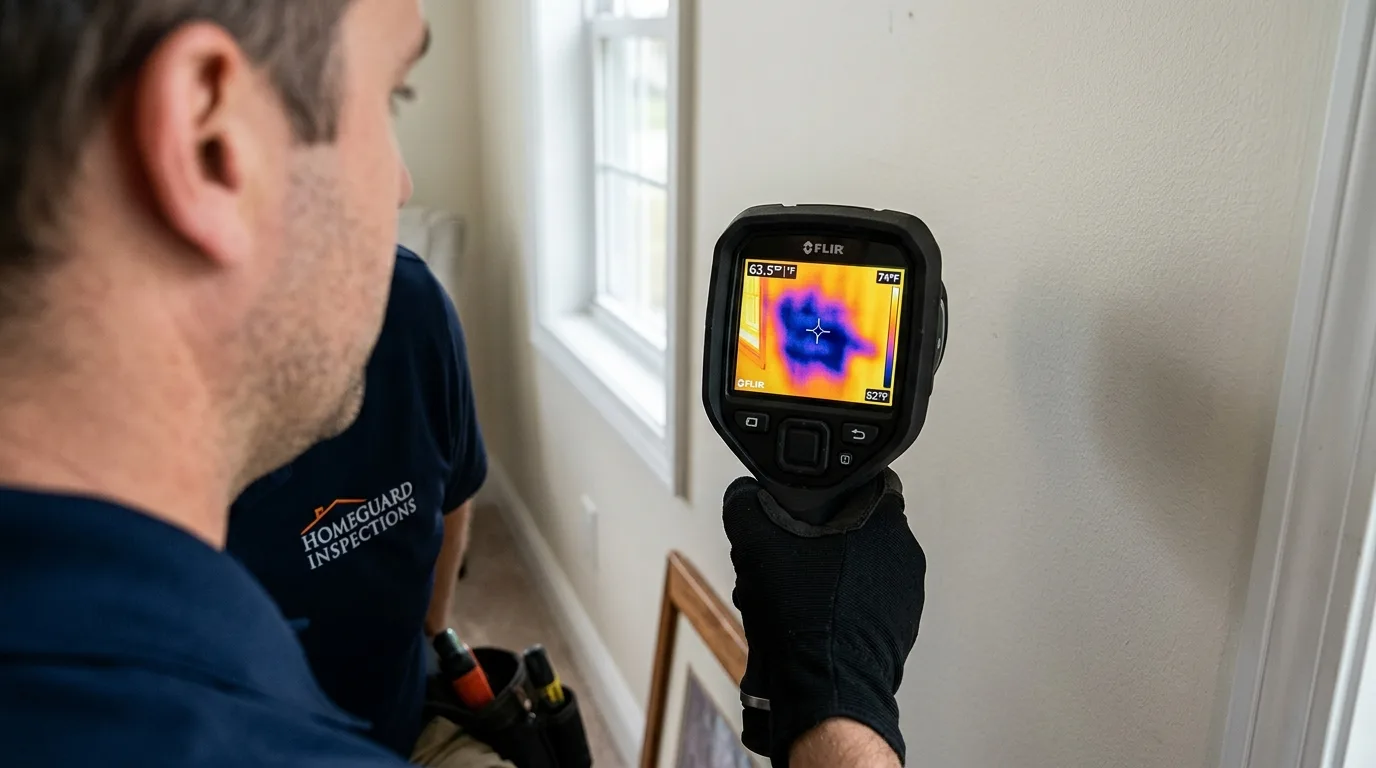
The water damage restoration services we provide start with a thorough assessment using moisture meters and infrared detection — finding all affected areas, not just the visible ones. We serve Bluffdale, Riverton, and across Salt Lake County and provide same-day assessment response when available.
Cost Factors for Water Damage Assessment and Restoration
Water damage restoration in Bluffdale ranges from $450–$1,000 for minor incidents caught early to $1,361–$6,270 for room-scale events and significantly more for whole-home situations. Across Salt Lake County, the Draper benchmark of $2,298–$2,361 reflects a typical full-scope job in this region. The single biggest variable is how quickly the damage is addressed — catching a problem at the musty-smell stage costs a fraction of addressing the same problem after mold has established and drywall requires replacement.
Dehumidification and moisture detection are core parts of every assessment — not add-ons. We provide documentation from the first day that supports your insurance claim throughout the process.
Frequently Asked Questions
How do I know if the water damage sign I’m seeing is new or old?
Active moisture is indicated by readings above ambient levels on a moisture meter, active condensation or wetness to the touch, musty odor that intensifies rather than fades over days, and visible efflorescence (white deposits) that is powdery or recent. Old, resolved damage leaves behind staining, discoloration, or structural deformation without active moisture readings. When in doubt, a professional assessment with calibrated moisture equipment gives you a definitive answer.
Can I handle minor water damage signs myself without professional help?
Small, clearly contained surface moisture — a toilet base that has dripped onto tile, for instance — can often be addressed with consumer drying equipment if caught within a few hours. Any moisture that has penetrated drywall, insulation, or flooring requires professional extraction and drying; consumer equipment lacks the capacity for structural drying. In Bluffdale’s clay-soil environment, moisture trapped at the foundation level is almost always an ongoing rather than self-resolving situation, which makes professional assessment important even when visible signs seem minor.
Do Bluffdale water damage repairs require permits?
Emergency extraction and drying do not require permits. Reconstruction work following water damage — replacing drywall, flooring, or structural elements — may require a building permit filed electronically with the city. Inspections are scheduled by calling 801-849-9425 before 3:30 pm the prior business day. We advise on all permit requirements for projects throughout Salt Lake County.
Bluffdale Water Damage Restoration — Early Response Saves Money
Call (877) 698-1311 for a professional assessment of water damage signs. We serve Bluffdale, Riverton, Draper, and all of Salt Lake County.
Related: