IICRC Certification: Why It Matters for Bluffdale Water Damage
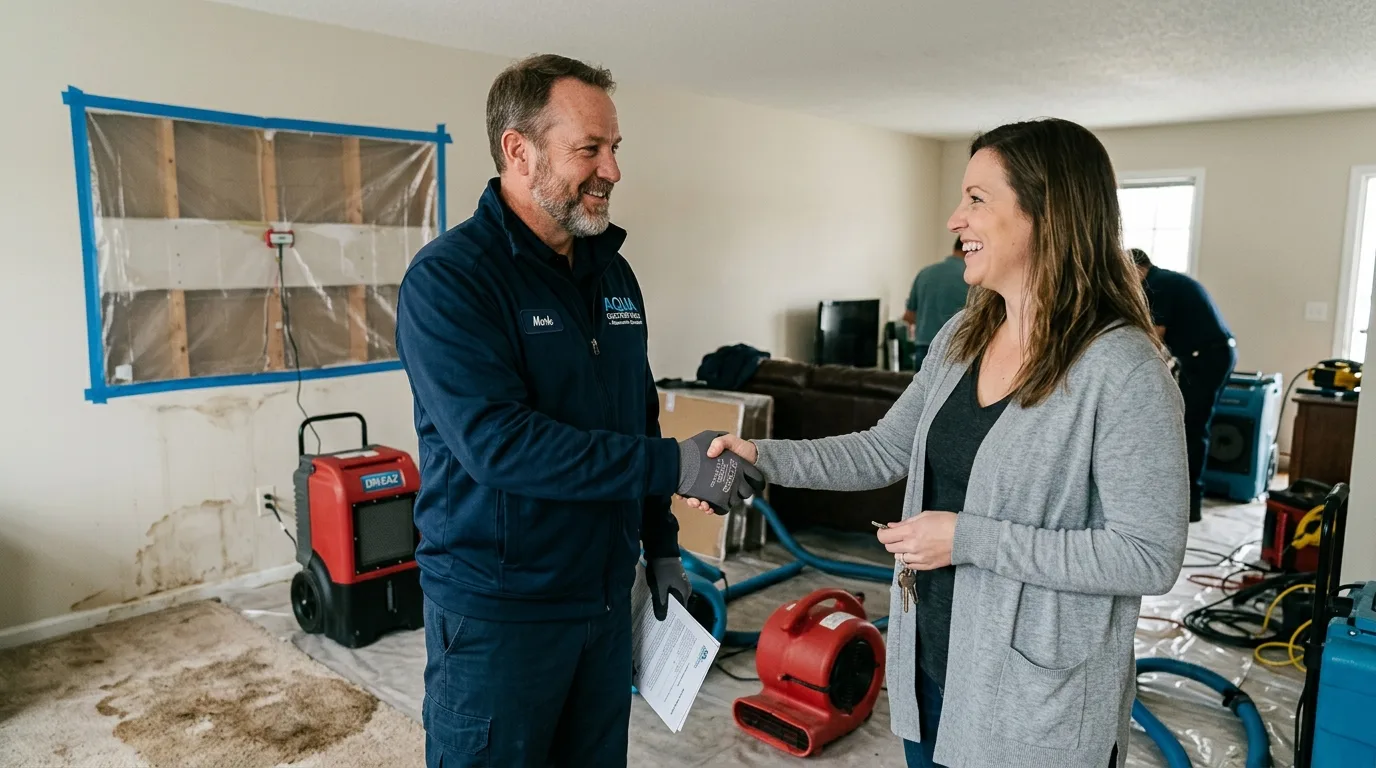
When evaluating water damage restoration companies in Bluffdale, you’ll encounter “IICRC certified” as a common claim. In this post, we cover what IICRC certification actually means, which specific credentials matter for different types of water damage work, and how to verify that a company’s certifications are real before hiring them for your Bluffdale restoration project.
IICRC-Standard Water Damage Restoration in Bluffdale
Certified technicians, documented drying, insurance-ready reports. Call (877) 698-1311.
Why IICRC Certification Matters for Bluffdale Homeowners
The IICRC — Institute of Inspection, Cleaning and Restoration Certification — is the primary professional standards body for the restoration industry. IICRC certifications are not marketing designations; they require technicians to pass written exams demonstrating knowledge of scientific principles (psychrometrics, material science, microbiology) and professional standards (IICRC S500, the Standard for Professional Water Damage Restoration).
In Bluffdale’s specific restoration environment — clay-soil moisture retention, seasonal spring flooding from snowmelt, and freeze-thaw pipe damage — the practical significance of these standards is direct. Bluffdale’s slow-draining soil means that water damage situations often involve sustained moisture contact that would cause a less-trained technician to declare drying complete before structural materials have actually returned to baseline. An IICRC Water Damage Restoration Technician (WRT) understands the psychrometric relationships that determine when drying is genuinely complete versus when surface dryness masks ongoing moisture in structural materials.
For insurance claims, IICRC certification matters because many insurance carriers specifically require that restoration companies follow IICRC S500 standards. Claims supported by documentation from certified technicians using industry-standard protocols are processed more smoothly and with fewer disputes than claims from non-certified vendors.
Types of IICRC Certifications Relevant to Water Damage in Bluffdale
Water Damage Restoration Technician (WRT): The foundational credential for water damage restoration. Covers principles of moisture movement, material science, psychrometric tracking, and the IICRC S500 standard for water damage restoration. Every technician who will work on your Bluffdale water damage project should hold this credential.
Applied Structural Drying Technician (ASD): An advanced credential covering the technical calculation of drying systems — determining the correct number of air movers and dehumidifiers needed for the affected space and conditions. ASD-certified technicians can calculate drying requirements scientifically rather than by rule of thumb, which matters for large-loss events in Bluffdale’s finished basements and multi-story homes.
Applied Microbial Remediation Technician (AMRT): The primary certification for mold remediation work. Covers mold biology, containment protocols, HEPA filtration systems, and remediation procedures. Any company performing mold remediation in Bluffdale — a common follow-on service after spring flooding — should hold AMRT certification.
Fire and Smoke Restoration Technician (FSRT): Specific to fire and smoke damage restoration. Covers smoke chemistry, odor elimination techniques, and the unique restoration requirements of post-fire properties.
Carpet Cleaning Technician (CCT) / Upholstery and Fabric Cleaning Technician (UFT): Relevant for water events that affect carpeted areas and soft furnishings. These credentials cover cleaning and salvage of soft materials that were water-damaged.
How to Verify IICRC Certification in Bluffdale
IICRC credentials can be verified through the IICRC’s online verification tool — ask any restoration company for the certifying technician’s name and verify it directly at the IICRC website. Legitimate certifications are searchable by technician name and include the credential type and expiration date.
Some companies hold firm-level IICRC certification (the company is a certified firm), while others have individual technicians who are certified. Firm certification adds another layer of accountability — the firm has agreed to uphold IICRC standards in its operations. Both matter; individual certification ensures the person on your property is qualified, firm certification ensures the company’s processes meet the standard.
Do not accept marketing language as verification. “We follow IICRC guidelines” without verifiable credentials is not the same as actual certification. Ask specifically for the certifying technician’s name and credential, then verify.
Practical Uses of IICRC Standards in Bluffdale Restoration
Psychrometric tracking: IICRC-standard drying requires tracking temperature, relative humidity, and specific humidity (grain weight) in the affected space daily and adjusting equipment accordingly. This data determines drying progress objectively — not by how the surface feels to the touch.
Category and class determination: IICRC standards define water damage category (1/2/3 by contamination level) and class (1–4 by moisture absorption). These classifications determine the appropriate response — a Class 4 event with deep moisture penetration requires a different approach than a Class 1 surface event. Certified technicians apply this framework to every project.
Documentation standards: IICRC protocols require specific documentation throughout the restoration process — initial moisture readings, equipment placement records, daily moisture logs, final clearance readings. This documentation is what insurance adjusters look for when reviewing claims for Bluffdale restoration projects.
Material-specific drying standards: Different materials have different acceptable moisture content baselines. Wood framing, drywall, concrete, and hardwood flooring each have specific targets. IICRC-trained technicians know these baselines and verify against them at clearance — not against a generic “feels dry” assessment.
IICRC-Certified Water Damage Restoration in Bluffdale
Documented, standards-based restoration throughout Salt Lake County. Call (877) 698-1311.
Cost Factors for Certified Restoration in Bluffdale
IICRC-certified restoration in Bluffdale follows the same pricing ranges as the market generally: $450–$1,000 for minor incidents, $1,361–$6,270 for room-scale events, and $7,000–$16,000+ for large losses. The Draper area adjacent to Bluffdale benchmarks at $2,298–$2,361 for standard restoration work across Salt Lake County. Certified restoration is not more expensive than uncertified work — it is simply more likely to be done correctly, which avoids the additional costs of mold remediation, reconstruction failures, and insurance claim disputes that follow incomplete restoration work.
For insurance claims, work performed by IICRC-certified companies and documented to IICRC standards is more likely to be paid at full value than work performed without certification. The documentation that certification requires is exactly what insurance adjusters need to process complete, accurate claims.
Frequently Asked Questions
Is there a way to verify that a Bluffdale water damage company is actually IICRC certified?
Yes — the IICRC maintains a searchable directory of certified firms and technicians at iicrc.org. You can search by company name or individual technician name to verify current certification status. Ask any company you’re evaluating for the name of the lead technician who will be on your project and look them up directly. This is the most reliable verification method.
Does IICRC certification guarantee quality work in Bluffdale?
Certification demonstrates that a technician has passed a knowledge exam on professional standards. It does not guarantee every project will be executed perfectly — that depends on the individual technician’s diligence and the company’s operational processes. However, certification does mean the technician knows the correct standards and has been tested on them. Combined with the documentation requirements that certification entails, IICRC-certified work is substantially more accountable than uncertified restoration.
Are there different IICRC standards for commercial vs. residential water damage in Bluffdale?
The IICRC S500 standard applies to both residential and commercial water damage restoration. Commercial projects may involve additional considerations — scope of affected area, equipment scaling, business continuity requirements — but the underlying technical standards for drying, documentation, and contamination classification are the same. For mold remediation, the IICRC S520 standard applies regardless of property type.
Certified, Documented Water Damage Restoration in Bluffdale
Bluffdale Water Damage Restoration — IICRC standards on every project. Call (877) 698-1311.
Related: