The Point Development: What Bluffdale Homeowners Should Know
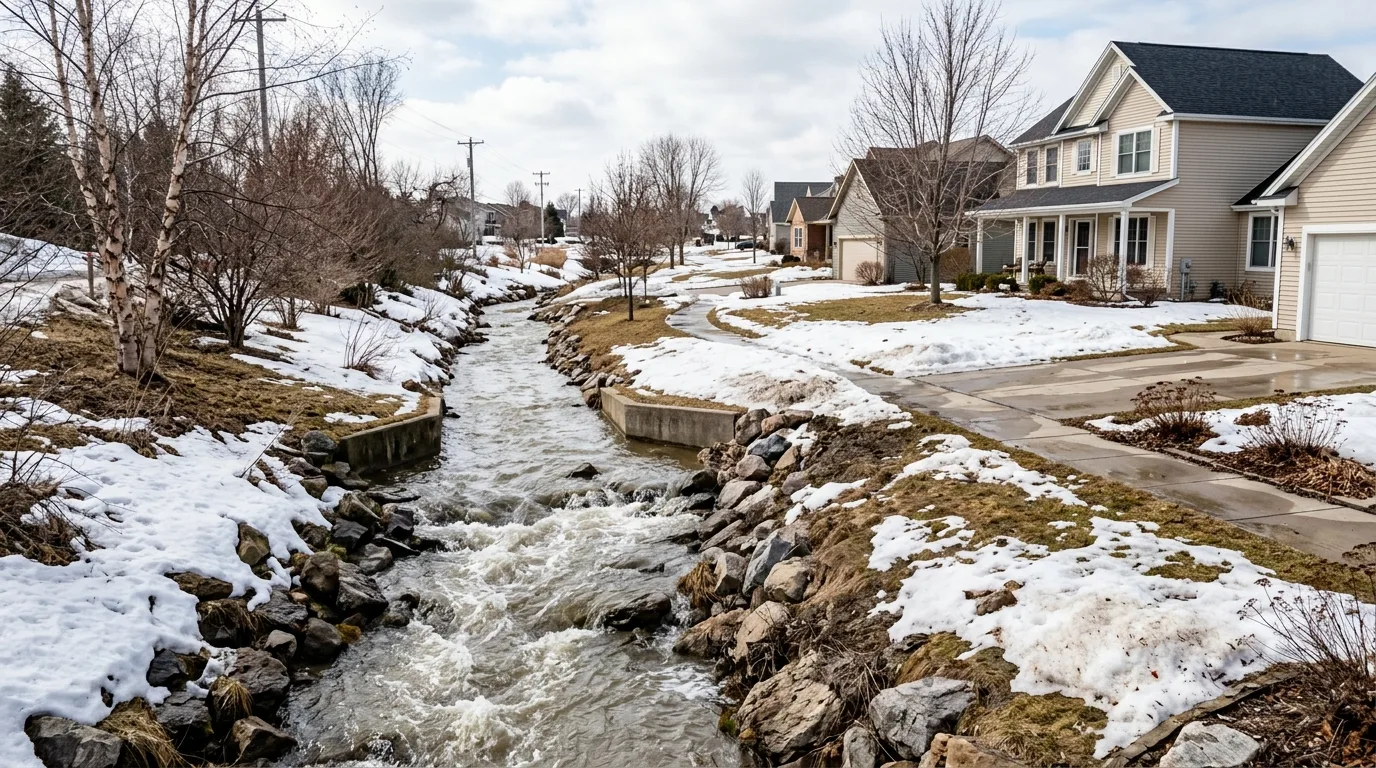
The Point — Bluffdale’s major mixed-use development on the site of the former Utah State Prison — is one of the largest construction projects in Salt Lake County. In this post, we cover what the development means for water drainage and flood damage risk in surrounding neighborhoods, what homeowners near active construction should monitor, and what to do if construction activity affects your property’s water behavior.
Water Damage Near Bluffdale's New Construction? We Respond.
Professional flood cleanup and water damage restoration throughout Salt Lake County. Call (877) 698-1311.
Why The Point Development Matters for Bluffdale Water Risk
The Point development occupies a significant land area at the northern section of Bluffdale near the I-15 corridor. Large-scale construction projects at this scale alter the local hydrology in ways that adjacent property owners often don’t anticipate. When soil is cleared, graded, and compacted for roads, foundations, and parking structures, the land’s natural infiltration capacity changes dramatically. Water that previously spread across and infiltrated into undeveloped soil now runs off quickly to the perimeter of the project.
Bluffdale’s existing clay-rich soil — the Bluffdale soil series with slow permeability — already drains slowly compared to most development areas. Add large areas of impervious surface (pavement, rooftops, and compacted subgrade) to this environment, and the volume of water that reaches the drainage system during spring snowmelt or summer monsoon storms increases substantially. Homeowners in nearby subdivisions — particularly those in lower-elevation areas relative to the project — may notice changes in their basement moisture behavior that correlate with construction phases.
Types of Water Risk Near Active Construction Sites
Altered surface drainage: Grading for The Point has redirected surface water flows across an area that previously drained differently. Neighboring properties that are downslope from the project boundary may receive surface runoff volumes that did not previously affect them.
Construction dewatering: Large construction projects often require active dewatering of excavated areas to allow foundation work to proceed. This water must go somewhere — typically to retention ponds, municipal storm drains, or surface discharge. Understanding how dewatering is managed during specific construction phases helps homeowners interpret unusual wet conditions in adjacent areas.
Disrupted underground drainage: Utility installations, stormwater infrastructure, and excavation can disrupt existing underground drainage pathways that have been in place for decades. A French drain or natural subsurface flow path that previously carried water away from a neighboring property may be altered by construction activity.
Vibration-related foundation stress: Large construction equipment operating near existing foundations can cause micro-vibrations that accelerate existing crack development in older foundation walls — creating new water entry points in homes that were not previously experiencing seepage.
Practical Monitoring Steps for Homeowners Near The Point
Document your current basement moisture baseline: Before the next construction phase, take moisture meter readings in your basement and photograph any existing conditions. This establishes a baseline that makes it easier to identify whether changes in moisture behavior correlate with construction activity.
Check your window well drains and sump pump monthly: If construction activity is generating more surface runoff toward your property, these are the first points of failure. Confirm drains are clear and the sump pump is operational before each rain or melt event during active construction phases.
Note changes in how water behaves on your property: If you start to see surface water pooling in areas that previously drained well, or if water accumulates faster after rain than it used to, this may indicate altered drainage patterns from nearby construction. Document these observations with photographs and timestamps.
Report significant drainage concerns to the city: The city of Bluffdale manages stormwater drainage and can investigate whether construction-related drainage changes are affecting neighboring properties. If you believe construction activity is directly causing water intrusion to your property, this is the appropriate reporting channel.
Keep our number accessible: Construction-related water damage events can happen quickly — particularly during storm events when altered drainage combines with heavy rain. Having a water damage restoration number ready means faster response if flooding occurs.
Construction-Area Water Damage in Bluffdale?
We respond to flooding caused by altered drainage throughout Salt Lake County. Call (877) 698-1311.
Commercial Water Damage Risks at The Point
For commercial properties within The Point development itself, water damage risk is elevated during the construction and early occupancy phases. New building envelopes — particularly in commercial construction — have the highest rate of water intrusion problems in the first 2–3 years of operation, as settling, thermal movement, and occupant-generated humidity interact with construction envelope systems. Building managers at The Point’s commercial properties should establish relationships with restoration contractors before the first significant water event.
Water damage restoration for commercial properties differs from residential work in scale, code requirements, and the need to maintain business continuity during restoration. We provide commercial water damage services for Bluffdale’s developing commercial base, including properties throughout The Point development and along the Bangerter Highway corridor.
Cost Factors for Development-Area Water Damage in Bluffdale
Flood damage cleanup in Bluffdale ranges from $1,361–$6,270 for room-scale events to $7,000–$16,000+ for major flooding. If construction activity has clearly altered drainage in a way that caused flooding to a neighboring property, there may be liability implications for the developer or contractor that go beyond standard homeowners insurance claims — consult with your insurer and potentially legal counsel if you believe construction caused the damage. We document the scope and condition of every job thoroughly, which is important for any subsequent liability discussions.
For residential properties near The Point, standard clean-water flood cleanup at $3–$4 per square foot applies for surface runoff events. We serve the full Bluffdale area including all neighborhoods adjacent to the development, and across the wider Salt Lake County region.
Frequently Asked Questions
Should I buy flood insurance if I live near The Point development in Bluffdale?
If you are in a FEMA flood zone — or if your property is downslope from The Point’s drainage basin — flood insurance is worth considering. Standard homeowners insurance does not cover surface flooding from external sources, and development-related drainage changes can alter flood risk for neighboring properties in ways that FEMA flood maps do not yet reflect (maps are typically updated on multi-year cycles). Consult with your insurance agent about flood insurance options; the NFIP 30-day waiting period means purchase decisions should be made proactively.
What should I document if I believe construction at The Point caused flooding on my property?
Document everything: dates and times of flooding, photographs of water entry points, moisture levels (if you have a meter), and any visual evidence of how water reached your property. Compare against prior conditions using historical photographs if available. This documentation supports any insurance claim and any discussion with the developer or their insurer about construction-related liability. We can provide professional assessment reports that document the condition of your property at a specific point in time.
Does water damage from construction-altered drainage affect property values in Bluffdale?
Repeated or poorly remediated water damage can affect property values — particularly in Bluffdale’s high-value market where buyers are sophisticated and conduct thorough inspections. Water damage that has been properly remediated, with documentation, typically does not have lasting impact. Unremediated water damage — visible mold, staining, odors, or structural issues — can significantly affect sale price and time on market. Prompt professional restoration protects both the home and its value.
Bluffdale Water Damage Restoration — Serving All of Salt Lake County
Call (877) 698-1311 for flood cleanup, water extraction, and mold remediation throughout Bluffdale and surrounding communities.
Related: