Bluffdale's Jordan River Flood Risk: What Homeowners Need to Know
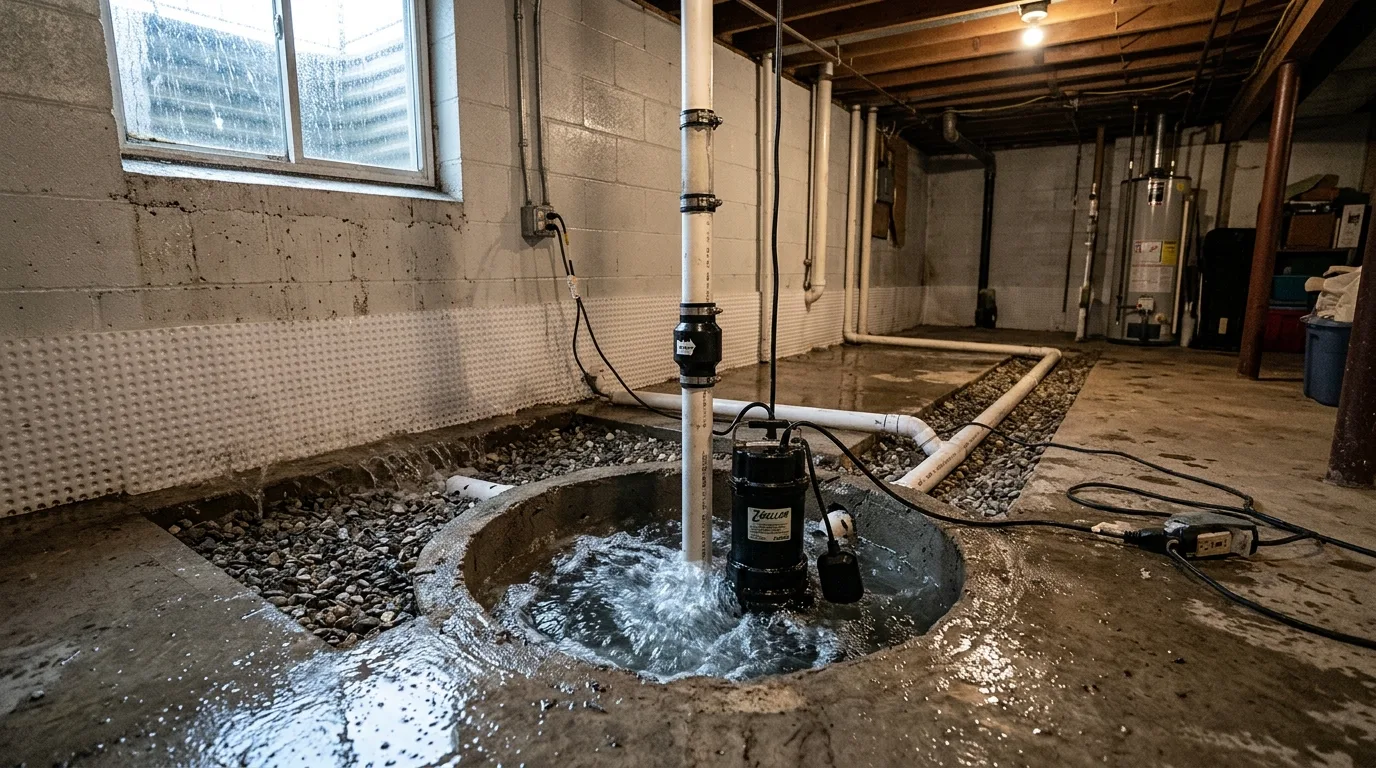
The Jordan River corridor through Bluffdale creates a specific flood risk that affects more homes than most homeowners realize — not just properties directly on the riverbank. In this post, we cover how the Jordan River affects groundwater levels throughout southern Bluffdale, which neighborhoods face elevated risk, and what homeowners can do to assess and reduce their exposure.
Jordan River Area Flooding in Bluffdale? We Respond 24/7.
Emergency flood cleanup throughout Salt Lake County. Call (877) 698-1311.
Why the Jordan River Matters for Bluffdale Homeowners
The Jordan River runs through Bluffdale along the Jordan River Parkway Trail corridor, and its influence on local water conditions extends well beyond the immediate riverbank. The city of Bluffdale has specifically identified potential basement flooding along the Jordan River due to high groundwater from heavy rains and snowmelt runoff — a risk that applies to a broad swath of properties throughout the western and central areas of the city.
The mechanism is not direct flooding (water overtopping the bank and entering homes) in most cases. Instead, the river maintains an elevated water table throughout adjacent areas during high-flow periods. When Bluffdale’s 43 inches of annual snowfall melts in March and April, the Jordan River’s flow increases substantially — and that elevated water table pushes upward through the clay-rich Bluffdale soil series, creating hydrostatic pressure against basement walls and floors across a significant radius from the river corridor.
Homes throughout Bluffdale’s western neighborhoods, including areas along Bangerter Highway and near Wardle Fields Regional Park, can experience basement moisture intrusion during peak Jordan River flow periods even if they are nowhere near the visible riverbank. Understanding this groundwater mechanism is essential for accurate flood risk assessment.
Types of Jordan River-Related Flood Risk in Bluffdale
Basement groundwater seepage: The most common manifestation. Elevated water table during high-flow periods creates sustained hydrostatic pressure against basement walls and floors. Water seeps through existing cracks, joint gaps, and porous block over a period of days to weeks during the peak flow period.
Floor drain backup: When the surrounding soil is fully saturated and groundwater is elevated, floor drain systems in lower areas can back up rather than draining away from the home. This is particularly relevant for basements with older French drain systems that discharge to a gravity drain rather than a sump.
Window well flooding: Properties near the Jordan River corridor with below-grade window wells experience window well flooding more readily during peak groundwater periods because the surrounding soil saturation eliminates the drainage capacity that normally prevents well overflow.
Crawl space water accumulation: Homes with crawl spaces in areas with elevated groundwater experience moisture accumulation under the floor when vapor barriers are absent or inadequate, leading to elevated interior humidity, mold development, and structural dampness.
Practical Assessment Steps for Bluffdale Homeowners
Check if your property is in or near a FEMA flood zone: FEMA flood maps designate areas by flood risk zone. Properties in the Special Flood Hazard Area (SFHA) face the highest risk and are typically required to carry flood insurance if they have a federally backed mortgage. Even properties outside the SFHA may be affected by Jordan River groundwater elevation during extreme events. Check FEMA’s flood map service at msc.fema.gov using your Bluffdale address.
Assess your property’s elevation relative to the Jordan River: Properties that are topographically lower than the river’s adjacent floodplain are at higher risk for groundwater elevation effects. A basic survey or topographic review can identify whether your property sits in a low-lying area relative to the Jordan River corridor.
Inspect foundation walls for moisture evidence: Efflorescence (white mineral deposits), moisture streaks, and horizontal staining on foundation walls are indicators of periodic groundwater contact. These signs may not be present during the dry season but become apparent after reviewing historical photographs or inspecting in late spring after peak flow periods.
Test your sump pump capacity: Homes near the Jordan River corridor should have a functioning sump pump with capacity appropriate for the potential groundwater intrusion volume. A 1/2 horsepower sump pump may be insufficient during peak flow periods; some properties require 3/4 HP or higher capacity, or a dual-pump setup with battery backup.
Jordan River Flood Cleanup in Bluffdale — Professional Response
Emergency water removal and structural drying throughout Salt Lake County. Call (877) 698-1311.
How Jordan River Flooding Differs from Pipe or Appliance Water Damage
Jordan River groundwater flooding creates a different restoration challenge than internal water events because the moisture source is external and ongoing. While a burst pipe can be stopped by shutting off the main water supply, groundwater intrusion from elevated water table continues as long as the surrounding soil is saturated — which in Bluffdale’s clay-soil environment can persist for days to weeks after peak river flow subsides.
This means that professional flood cleanup after a Jordan River groundwater event requires not just extraction and drying, but also assessment of ongoing moisture migration and potentially continuous monitoring and re-extraction until surrounding soil moisture returns to baseline. Bluffdale’s slow-draining clay soil means the recovery period is typically longer than for sandy-soil areas in other parts of Utah.
Insurance coverage for Jordan River groundwater flooding follows the standard flood insurance rules: standard homeowners insurance typically excludes surface flooding and groundwater intrusion from external sources. NFIP flood insurance covers this type of event for properties in or near flood zones. We document all flood cleanup work thoroughly regardless of insurance coverage status.
Cost Factors for Jordan River Flood Cleanup in Bluffdale
Flood damage cleanup in Bluffdale ranges from $1,361–$6,270 for room-scale flooding to $7,000–$16,000+ for significant events. Groundwater intrusion events near the Jordan River corridor typically involve clean or lightly contaminated water (Category 1 or 2) at $3–$7 per square foot, depending on whether any sewer line interaction is present. The Draper area adjacent to Bluffdale benchmarks at $2,298–$2,361 for standard flood cleanup across Salt Lake County.
Response time matters significantly for groundwater events. Unlike pipe floods where extraction stops the source, groundwater intrusion may require multiple extraction sessions over 2–3 days as the surrounding soil continues releasing moisture into the structure. We maintain equipment at affected properties throughout the drying process and monitor moisture levels daily until clearance is achieved.
Frequently Asked Questions
How do I know if my Bluffdale property is affected by Jordan River groundwater?
Signs specific to Jordan River groundwater intrusion include: basement moisture that appears in late March or April consistently, moisture that comes through the base of foundation walls (not through obvious cracks), floor drain backups that correspond with high-precipitation or snowmelt periods, and moisture patterns that are consistent year to year in the same season. If your basement has been dry in November but wet in April for multiple consecutive years, the Jordan River groundwater cycle is a likely contributing factor.
Should I purchase flood insurance if I live near the Jordan River in Bluffdale?
If your property is within a FEMA-designated Special Flood Hazard Area (floodway or 100-year floodplain), flood insurance may be required as a mortgage condition. Outside of designated zones, flood insurance is still available through the NFIP and provides coverage that standard homeowners insurance does not — specifically covering groundwater intrusion and surface flooding from external sources. Given Bluffdale’s Jordan River proximity and clay-soil groundwater retention, flood insurance merits consideration for many homeowners in the western and central areas of the city.
What is the best long-term solution for Jordan River groundwater flooding in a Bluffdale basement?
The most effective long-term solutions address the hydrostatic pressure rather than just responding to intrusion after the fact. Interior drain tile systems (a perimeter French drain beneath the basement floor connected to a sump pump) intercept groundwater before it builds up against the wall. Exterior waterproofing membranes applied to foundation walls are the most permanent solution but require excavation. A high-capacity sump pump with battery backup ensures extraction capability during power outages that often accompany the storms that trigger flooding events. We focus on the restoration scope; for permanent waterproofing solutions, we can refer you to qualified waterproofing contractors who work in Salt Lake County.
Flood Cleanup Near Bluffdale's Jordan River Corridor
Call Bluffdale Water Damage Restoration at (877) 698-1311 for emergency response and professional flood cleanup.
Related: